I had got on so fast of late that I had even started a boy in boots- top boots- in bondage and slavery to whom I might be said to pass my days. For, after I had made this monster (out of the refuse of my washerwoman's family) and had clothed him with a blue coat, canary waistcoat, white cravat, creamy breeches, and the boots already mentioned, I had to find him a little to do and a great deal to eat; and with both of these horrible requirements he haunted my existence. (233)I understand that this was discussed in class on Monday, but since I wasn't there, I have no idea what it is talking about. It mentions how it is a slave to him and how he has clothed it. Could someone please explain to me who exactly the Avenger is and why it is mentioned in context with Joe's visit to Pip in London.
Friday, March 12, 2010
Question About Chapter 27
In chapter 27 of Great Expectations, Pip talks about the Avenger.

Friday, March 5, 2010
An Image of Great Expectations

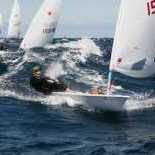
This photo to me is a representation of how once the day comes for Pip to leave his home, time speeds up and it seems to take no time before he is gone and on his way to London. Pip says "We changed again, and yet again, and it was not too late and too fat to go back, and I went on (171)." It seems to me that at the last minute he wished that Joe would come or he could go back and say goodbye one last time, but before he could, he was gone. After he is far enough that he can not go back, London seems to be in front of him immediately.
Friday, February 26, 2010
Great Expectations First Stage
At the end of chapter 9 of Great Expectations, it closes with the following paragraph:
My experiences in life have been very different then those of Pip, but there have been some days that seem to shape the rest of my life. One day that I particularly think of is a day in the fourth grade. When children are young, they rarely think of how they compare to others in terms of school work. Before this day I didn't really think of my self as smart, or that I was good at math or reading. Our fourth grade class had so many students and the fifth grade had so few, that our teachers decided to move some of the fourth graders on in reading, math, or both. I never thought that I might be one of those lucky students, let alone one of the four that got moved on in both subjects. From that day on, I realized that I could succeed and was good at school.
That was a memorable day to me, for it made great changes in me. But it is the same with and life. Imagine one selected day struck out of it, and think how different its course would have been. Pause you who read this, and think for a moment of the long chain of iron or gold, of thorns or flowers, that would never have bound you, but for the formation of the first link on one memorable day.The day that Pip is referring to in this quote is the day where he first meets Miss Havisham and Estella. After this day, he is no longer willing to live his life as a mere blacksmith. Estella spends the day bringing him down with her comments on her thick boots and coarse hands. He is determined to be worthy of Estella and this day will forever change the course of his life.
My experiences in life have been very different then those of Pip, but there have been some days that seem to shape the rest of my life. One day that I particularly think of is a day in the fourth grade. When children are young, they rarely think of how they compare to others in terms of school work. Before this day I didn't really think of my self as smart, or that I was good at math or reading. Our fourth grade class had so many students and the fifth grade had so few, that our teachers decided to move some of the fourth graders on in reading, math, or both. I never thought that I might be one of those lucky students, let alone one of the four that got moved on in both subjects. From that day on, I realized that I could succeed and was good at school.
Sunday, February 14, 2010
Three Points
The three points that I am making in my body paragraph are how similar Miss Prism and Chasuble's personalities are, how they both have occupations that encourage their formal personalities and don't encourage them to express how they truly feel. Also I included how they also have different experiences before they met that, even though are discouraging, shows them that even when they make mistakes in their lives, they are still the same people that they thought they were before Chasuble knew that Miss Prism lost a baby that she was taking care of. I believe that my points and my commentary elaborates on our thesis and help make our point.
Friday, January 29, 2010
The Importance of Being Earnest and the Victorian Era
When reading The Importance of Being Earnest which was written and takes place in the Victorian Era, research on the Victorian Era helped me understand more of what happens in the book. One example of this is the relationship between Lady Bracknell and her daughter Gwendolen. When researching, I found out that it was mainly up to the mother to teach the daughter. This information helps when understanding lines that Gwendolen says like when she says that her mother raised her to be shortsighted as well as the relationship between them in regards of Gwendolen wanting to marry Jack.
Lady Bracknell's thoughts on Gwendolen's engagement to Jack are also easier to understand with previous research. Marriage in the Victorian Era was pretty much only to improve your social standing. Though Jack is wealthy and has been raised in a wealthy family, Lady Bracknell refuses to allow Jack and Gwendolyn to marry because he does not know who his family is since he was found in a handbag. To Lady Bracknell it doesn't matter that they want to marry, family is too important to her and she does not want someone in her family who has unknown lineage.
Lady Bracknell's thoughts on Gwendolen's engagement to Jack are also easier to understand with previous research. Marriage in the Victorian Era was pretty much only to improve your social standing. Though Jack is wealthy and has been raised in a wealthy family, Lady Bracknell refuses to allow Jack and Gwendolyn to marry because he does not know who his family is since he was found in a handbag. To Lady Bracknell it doesn't matter that they want to marry, family is too important to her and she does not want someone in her family who has unknown lineage.
Wednesday, December 16, 2009
Seven Commandments
One: Whatever goes upon two legs
is an enemy.
A fundamental principle
The start of a
Revolution.
They are evil;
They
abuse
us
but
abuse
us
but
we will trade with
Them
and befriend
Them.
Two: Whatever goes upon fore legs,
or has wings,
is a friend.
Animals are the
better creatures.
Except
for
one.
Snowball.
He worked with the
Enemy.
He betrayed us.
He is one of
Them.
He is not a
friend.
Three: No animal shall wear
cloths.
The mark of
humans
we
are
not
like Them.
But we need
to show
that we are equal to
humans.
Put ourselves forward.
Pigs can wear
clothing
sometimes.
Four: No animal shall sleep
in a bed.
A sign of humanity.
We are better then
Them
But
we
need
our
rest and health.
We can sleep in beds
without sheets.
Five: No animal shall drink
alcohol.
It causes Their
cruelty and
weakens
their
mind.
We
are
wiser and
stronger then they are
None shall drink
to excess.
Six: No animal shall kill
any other animal.
We shall not be
slaughtered like
we
were
before.
We
are
not
creatures without a
mind
we won’t make
Their mistakes.
None
shall be killed
without cause.
Seven: All animals are
equal.
Our equality runs the farm
and keeps
us moving
We
are
all
equal.
We
are
not ruled over. We
govern ourselves.
But some animals
are more
equal
than
others.
Friday, December 4, 2009
Siren Song- Teal Van Dyke; I am Waiting- Madison Niermeyer
When watching Teal Van Dyke perform "Siren's Song", the first thing I noticed was her presence. She didn't use excessive hand motions, but you could see in her face and hear in her voice the true meaning of the poem. Just by the way she stood, she commanded the stage with her physical presence. Her voice and articulation was spot on. Emphasizing the word in the sentence that should be noticed and playing on the satirical tone of the poem made it wonderful to watch.
My interpretation of this poem's meaning is that people want to be able to help others, even if it harms them. They think that they are so special, but truly they are just being lured into harms way. People will say anything to make you believe them and help them, when they don't truly mean it. Everyone wants to be special and noticed, enough that they will die for it.
My interpretation of this poem's meaning is that people want to be able to help others, even if it harms them. They think that they are so special, but truly they are just being lured into harms way. People will say anything to make you believe them and help them, when they don't truly mean it. Everyone wants to be special and noticed, enough that they will die for it.
Subscribe to:
Posts (Atom)